Filter Cloth Service Life: Measure Wear, Not Calendar Time
Filter cloth service life is decided by operating evidence more than by the number of months since installation. The same material can perform well for many cycles in one press and begin to fail early in another because feed solids, temperature, chemical exposure, cleaning practice, plate condition, and cycle pressure all differ. A calendar-based replacement rule therefore creates two problems: it can remove a serviceable cloth early, or it can leave a worn cloth in place until filtrate quality and throughput have already fallen. The more practical approach is to record a small set of repeatable measurements and use those measurements to trigger inspection, a cleaning trial, or replacement.
Why Calendar Time Misleads Filter Cloth Replacement Decisions
Calendar age does not describe how much work a cloth has done. A cloth that has been idle in storage may still be near new condition, while a cloth running continuous cycles with abrasive solids can lose performance before the planned replacement date. The same date can also hide very different conditions across positions in one press, because individual plates see different feed distribution, wear, and cleaning. Replacement decisions therefore need to be based on measured changes that can be compared with the cloth’s own baseline, not on the number of weeks since installation.
Start With a Measured Baseline for Each Cloth Position
Before using wear as a trigger, record the cloth’s clean condition at installation: clean differential pressure at the normal feed rate, time to reach terminal pressure or volume, filtrate clarity, cake release, and any visible seam, edge, or fit condition. The baseline should be recorded for each position, not just for the press as a whole, because one plate may carry most of the duty.
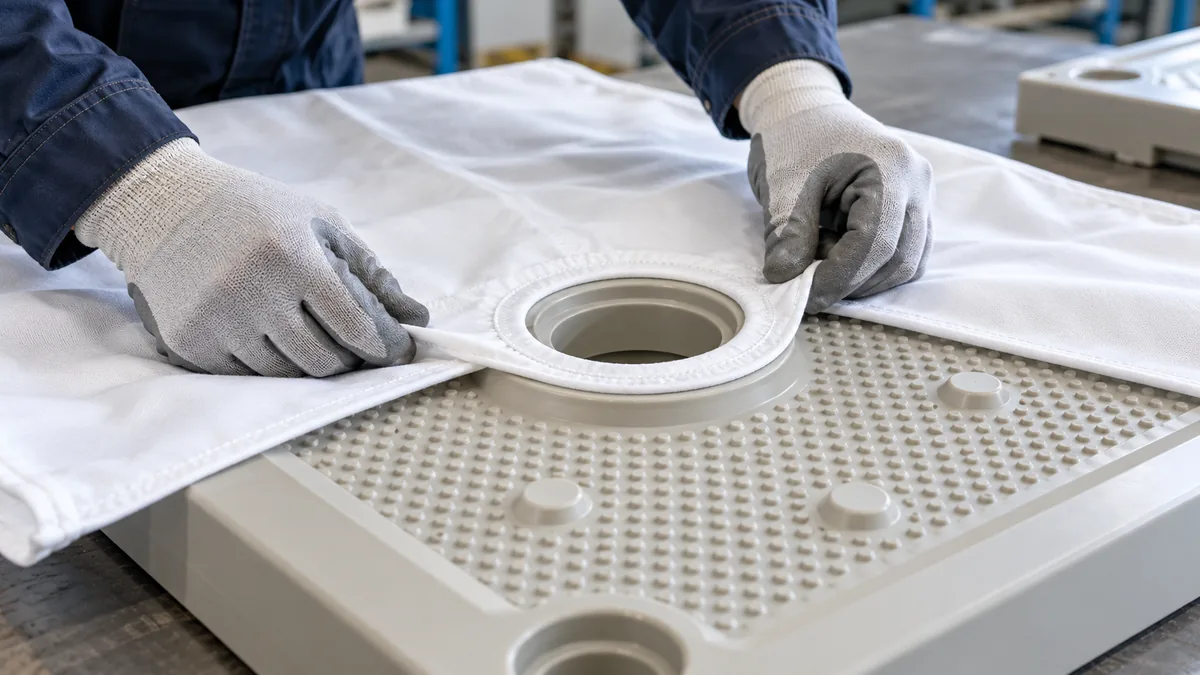
The baseline must be measured under the same feed and cleaning conditions that will be used in normal service. If the slurry solids, particle size, temperature, pH, or wash practice changes later, a new reference may be needed before a trend can be interpreted safely.
Track Pressure, Filtrate Quality, and Cake Release Together
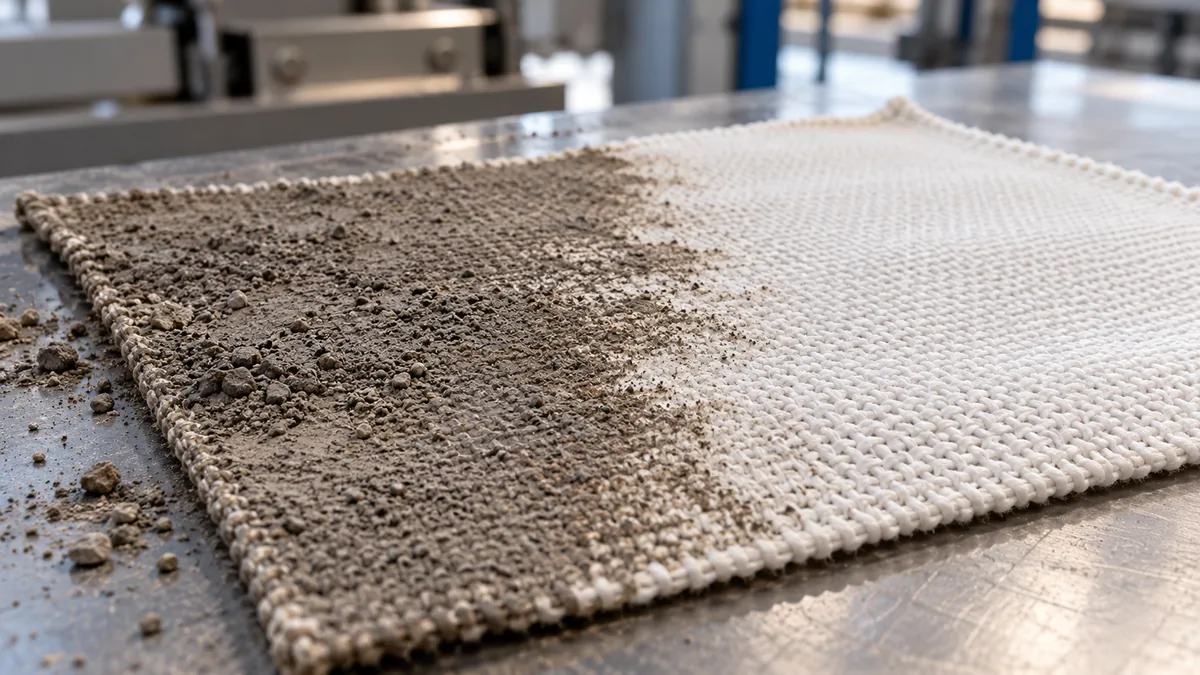
One measurement alone rarely indicates that a filter cloth has reached the end of useful service. A blinded cloth may raise pressure while clarity remains acceptable, while a damaged cloth may lower pressure at the same time that solids leak into the filtrate. Pressure, clarity, and cake release should therefore be read together against the position baseline.
| Operating change | What it may indicate | Next check before replacement |
|---|---|---|
| Rising clean pressure after washing | Blinding or embedded fines | Compare feed solids, wash chemistry, and cloth face |
| Longer filtration at similar clarity | Surface blinding or reduced permeability | Inspect cloth surface and confirm cleaner compatibility |
| Cloudy filtrate after stable service | Hole, seam failure, edge wear, or fabric thinning | Isolate position and inspect seams, edges, and plate seal |
| Wet or sticky cake discharge | Loss of release finish, wrong weave, or feed change | Check cake release after cleaning and cloth face condition |
| Lower than normal terminal pressure | Bypass, fabric damage, or gasket leak | Confirm cloth fit and inspect for tears and seal defects |
Cake release is often one of the earliest practical signs that a cloth is losing its original surface behavior. A cloth that still filters with acceptable clarity may still need early replacement if the cake no longer separates cleanly, increases cycle time, or leaves a residue layer that makes subsequent cycles worse.
Combine Direct Cloth Inspection With Load-Cycle History
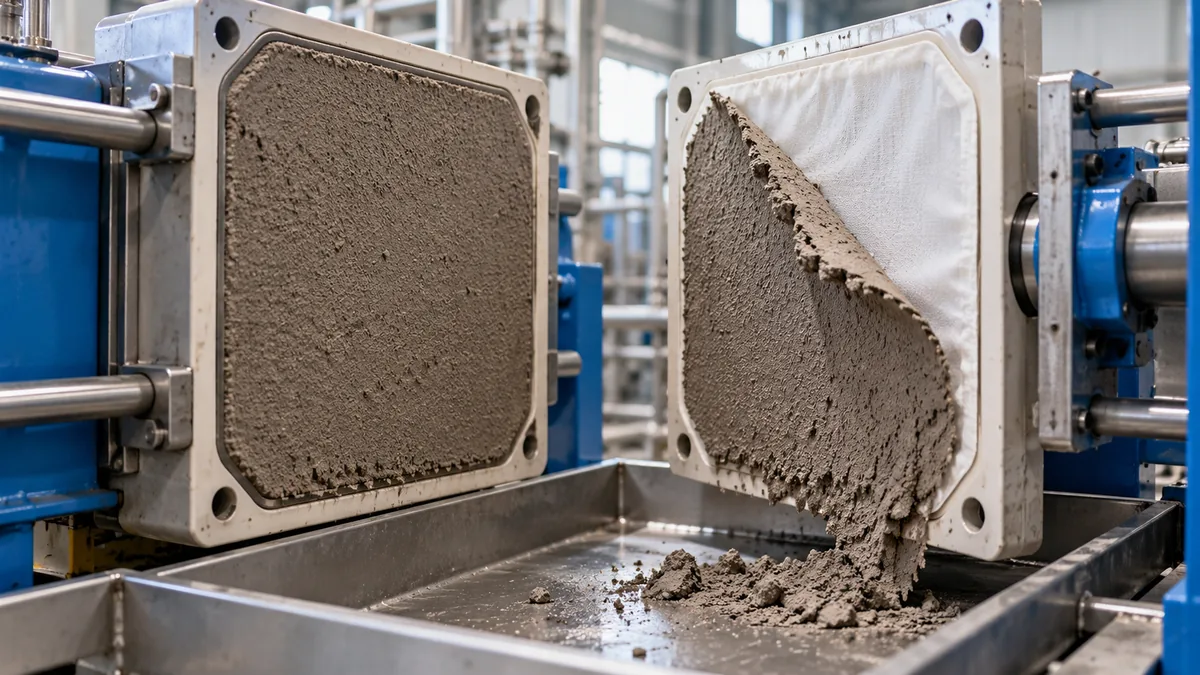
Direct inspection should look at more than obvious holes. Yarn flattening, weave distortion, broken filaments, edge wear, feed-port wear, stretching, embrittlement, and embedded particles all affect performance before a large tear appears. Compare the used cloth with the original weave and surface condition, and check both the filtrate side and the plate side.

The inspection becomes more useful when it is combined with load-cycle history. Record cycles per position, wash frequency, pressure trends, and any changes in feed material or chemicals. A cloth with a high cycle count and a stable baseline may continue in service, while a cloth with few cycles and a sharp pressure rise should be inspected immediately.
Use a Wear Indicator Set Instead of a Single Limit
A single threshold, such as a maximum differential pressure, is not enough because acceptable pressure depends on the slurry and the cloth construction. A better replacement rule uses several indicators together: clean pressure trend after washing, filtrate clarity, cake release, cycle time, direct cloth condition, and cleaning response. Replacement is more strongly supported when several indicators move in the same direction.
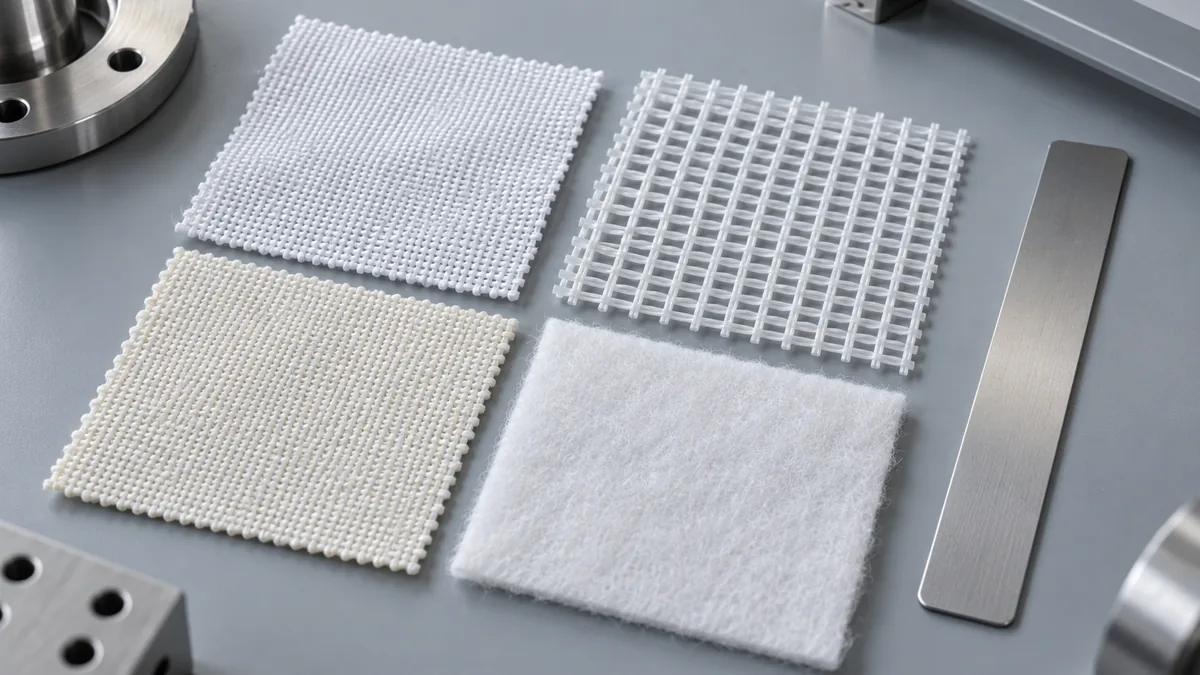
Material and construction limits should also be part of the record. Shine Technology’s filter cloth range lists different continuous temperature limits by material, with polypropylene cloth listed to 85°C, polyester to 120°C, and nylon to 100°C. Exceeding the material’s listed condition may not create immediate visible damage, but repeated excursions can change stretch, shrinkage, and chemical resistance in ways that shorten useful life.
Build a Replacement Trigger Record for Repeatable Decisions
A simple position-level record makes the next decision repeatable. For each cloth, log the installation date, material and weave, feed conditions, cycle count, clean pressure after washing, filtrate clarity, cake release, cleaning method, and inspection notes. Before a planned replacement, compare the current readings with the last stable baseline and identify which indicator moved first.
If clean pressure remains high after a confirmed cleaning trial and clarity or cake release has also moved away from baseline, replacement is usually the lower-risk action. If damage is localized to a seam, edge, or feed port, record the location and inspect the plate and cloth fit before simply installing the same material again.
Turn Operating Data Into a Cloth Replacement Rule
If cloth replacement is currently based on calendar time, start with a position-level one-page record and review it before the next scheduled change. Shine Technology’s technical team can help compare the current cloth construction, cleaning conditions, and replacement candidates using operating data and inspection photos. Contact the team through the Shine Filtration website.
FAQ
How many cycles should a filter cloth last?
There is no universal cycle count. Useful life depends on the material, weave, feed solids, temperature, pH, cleaning method, and plate condition. A cloth should be evaluated against its own baseline rather than a fixed number of cycles.
Can differential pressure alone indicate when to replace filter cloth?
No. Differential pressure usefully shows flow resistance, but it does not separately identify blinding, cake release loss, or localized damage. Use it together with filtrate clarity, cake release, cycle time, and direct inspection.
What is the difference between blinding and mechanical damage?
Blinding usually appears as rising pressure with acceptable clarity and poor recovery after cleaning. Mechanical damage more often appears as cloudy filtrate, lower terminal pressure, or visible holes, seam failure, or edge wear.
Should I replace a cloth because it is stained or discolored?
Not by itself. Staining can be cosmetic while the cloth still filters and releases acceptably. Replace the cloth when measured pressure, clarity, cake release, or direct condition move outside the established baseline and do not recover after cleaning.