Viscous Foam Deposition
Sticky substances form dense deposits in mesh openings.
Dust and sticky foam block wire mesh, increasing resistance, reducing gas volume and allowing foam and mist to escape from the tower.
Dust and sticky foam block wire mesh, increasing resistance, reducing gas volume and allowing foam and mist to escape from the tower.
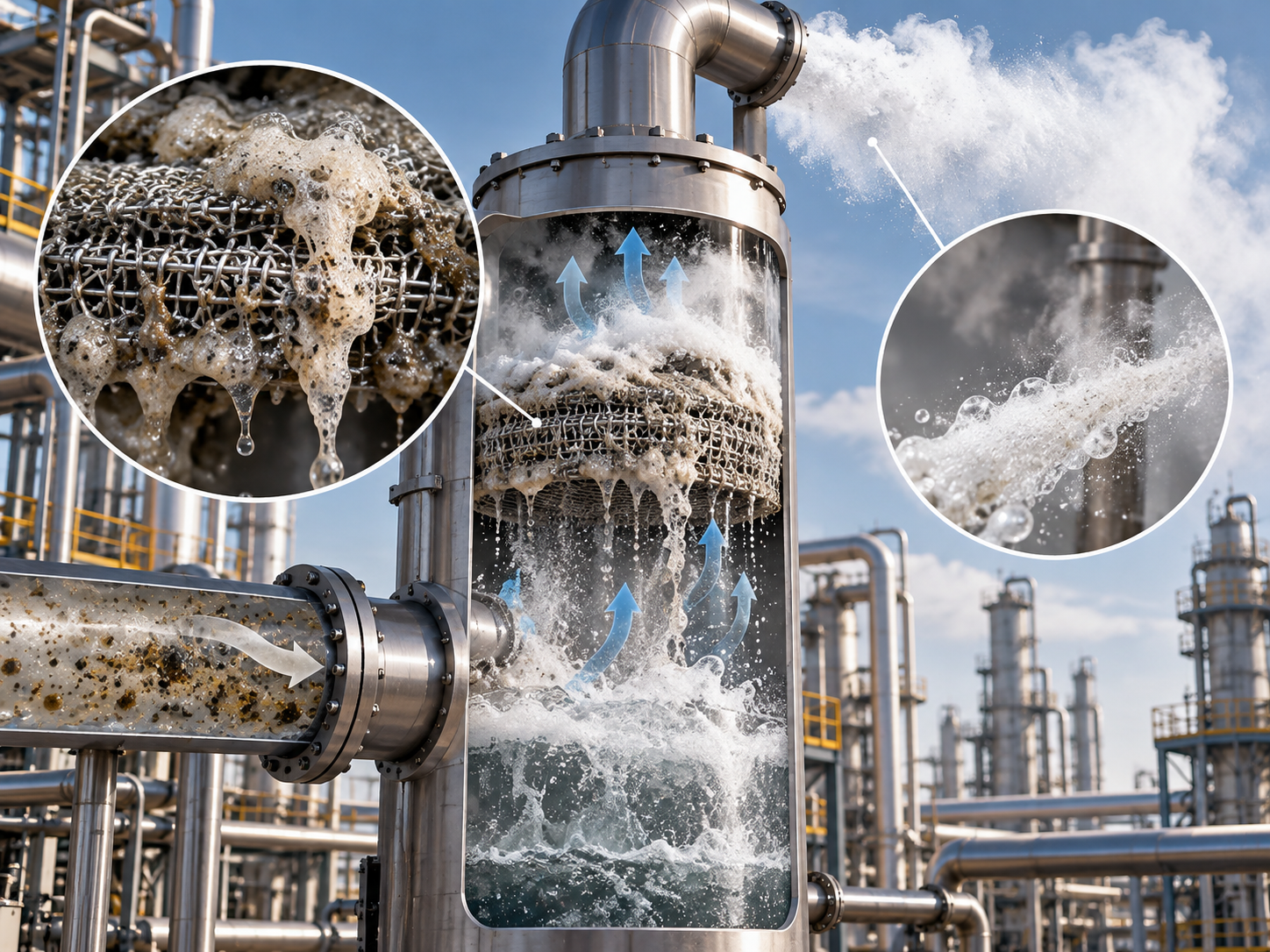
Sticky substances form dense deposits in mesh openings.
Deep dust buildup cannot clear under normal airflow.
Broken or distorted mesh loses separation efficiency.
Excess density blocks easily; low density misses fine droplets.
Match density, thickness and material to foam, particles and corrosion.
Flush deposits regularly to restore ventilation.
Use corrosion-resistant, anti-clogging woven structures.
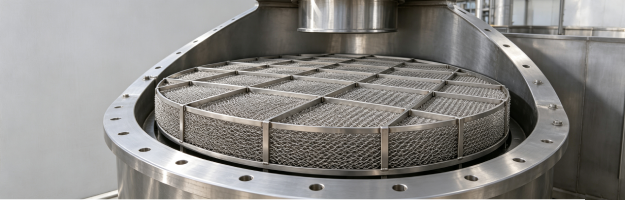
Wire-mesh droplet separator for efficient 3–5 μm mist removal with low pressure drop and flexible materials.
View Product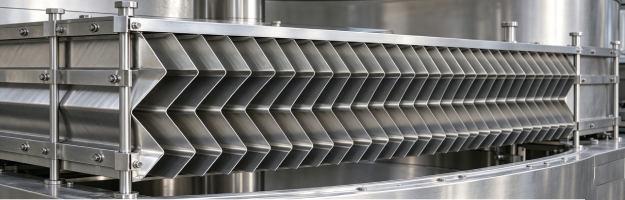
Chevron-vane gas-liquid separator with high flow capacity, low pressure drop and broad corrosion-resistant material options.
View ProductShare your equipment model, medium, temperature and operating pressure. Our engineers will recommend a practical solution within 24 hours.