Ultra-Fine Colloids
Fine colloidal particles create strong adhesion between cake and fibers.
Cake sticking is a surface-release problem: the formed cake remains bonded to the cloth after the plates open, increasing manual scraping and leaving residue that slows the next cycle. Evaluate particle fineness, flocculant condition, cloth surface and installation tension rather than treating it only as pore blinding.
If filtration flow is acceptable but the cake will not release, focus on the interface between cake and cloth. Sticky colloids, gel-forming chemical dosage and a rough or unsuitable weave are more relevant than simply increasing feed pressure.
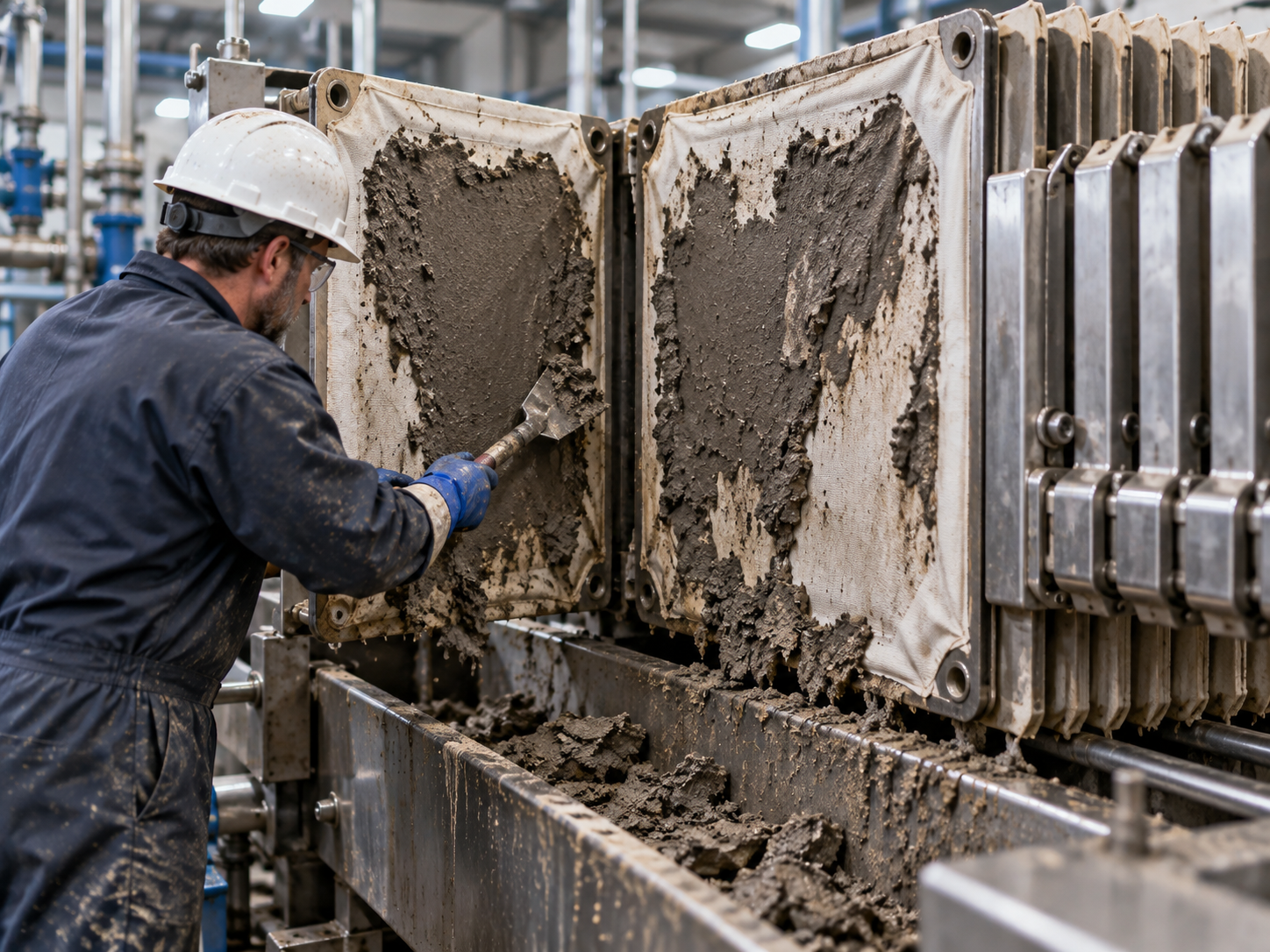
Fine colloidal particles create strong adhesion between cake and fibers.
The cloth surface lacks anti-stick performance.
Overdosing creates sticky gel residue.
Loose installation allows the cake to grip the cloth tightly.
Adopt a smooth, non-stick coated surface with an optimized weave.
Adjust flocculant concentration and feed solids to reduce gel formation.
Set uniform cloth tension and keep the discharge surface clean between cycles. Where process conditions permit, combine a smoother monofilament-style surface with plate vibration or another cake-drop aid instead of relying on manual scraping.
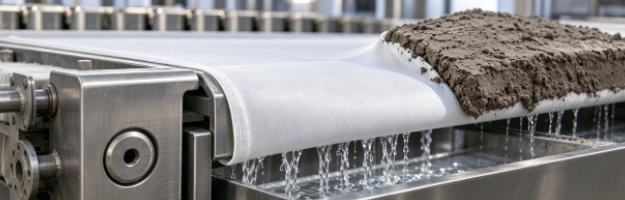
Uniform two-dimensional mesh with high flow, easy cake release and reusable construction.
View Product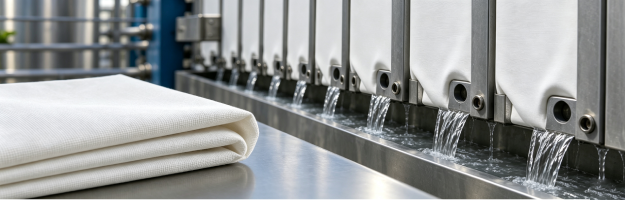
Balanced temperature resistance, oxidation resistance and dimensional stability for neutral and weak-acid filtration.
View ProductShare your equipment model, medium, temperature and operating pressure. Our engineers will recommend a practical solution within 24 hours.