Excess Feed Pressure
Operating pressure exceeds the plate rating.
A cracked plate is a loss-of-integrity event, usually visible at a feed hole, corner, chamber wall or edge. Stop the cycle and identify whether overload, trapped debris, heat or chemical weakening, or one-sided filling initiated the fracture before another plate is installed.
Trace the fracture origin and direction rather than treating every slurry leak as a gasket fault. A crack that propagates through the plate body requires removal; it cannot be corrected by higher clamping force or surface cleaning.
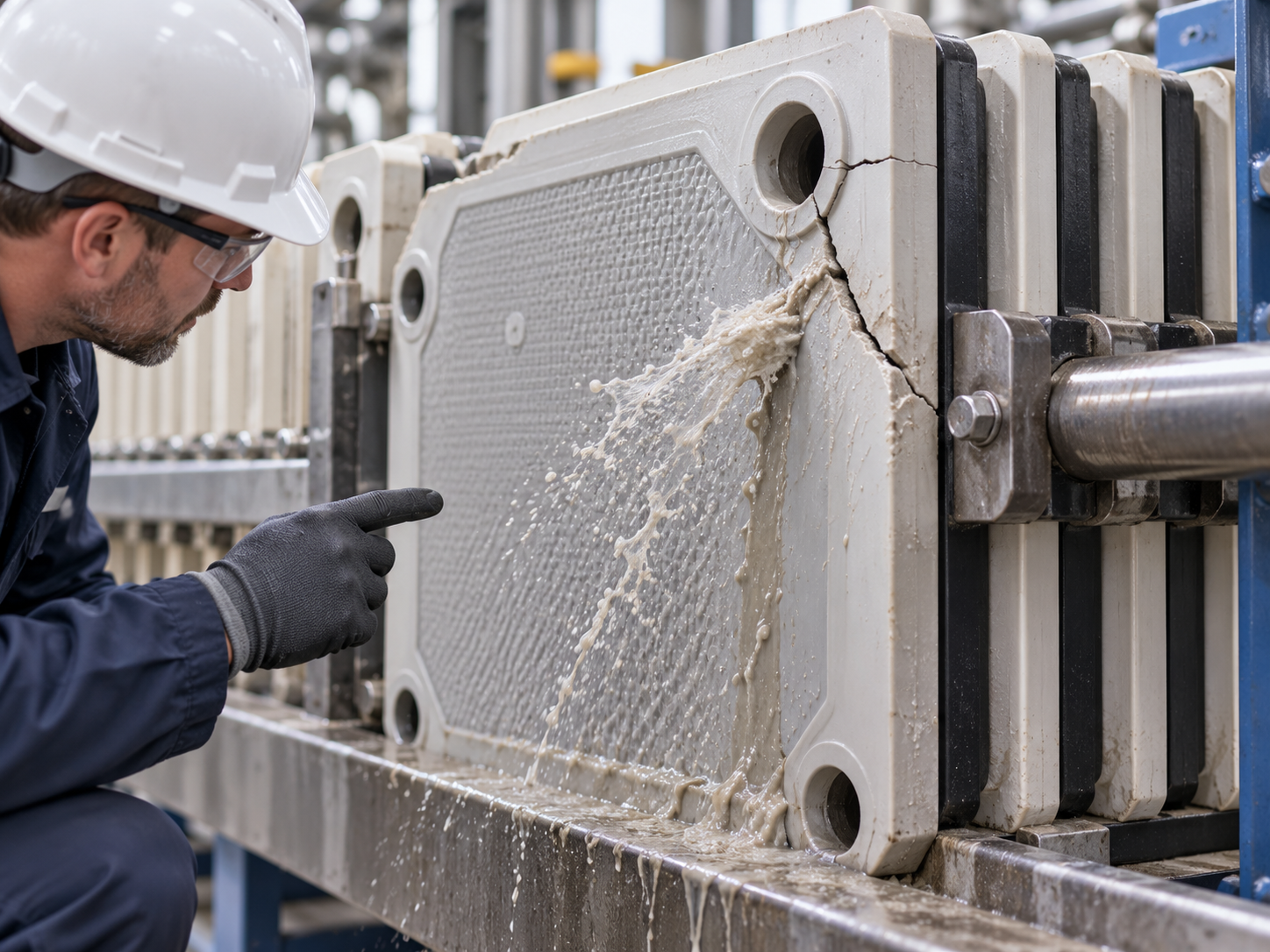
Operating pressure exceeds the plate rating.
Debris or wrinkled cloth is trapped during clamping.
Heat or chemical attack weakens plate toughness.
One-sided chamber filling creates unbalanced stress.
Keep pressure within the plate rating and increase it gradually.
Remove foreign objects and lay cloth flat before startup.
Replace the fractured component with a material and pressure class verified for the slurry chemistry, maximum temperature and press rating. After replacement, confirm even chamber filling so the new plate is not exposed to the same unbalanced load.
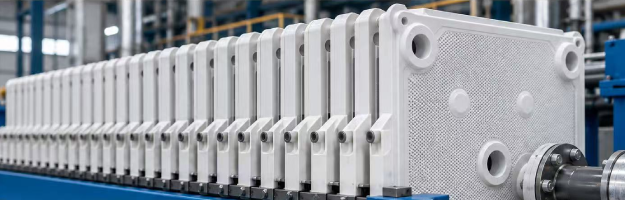
One-piece modified PP plate combining corrosion resistance, toughness and pressure resistance.
View Product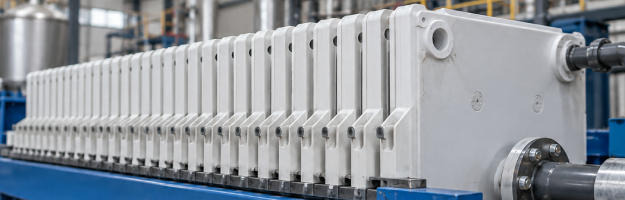
HDPE filter plate with strong wear, impact and corrosion resistance and a low-adhesion surface.
View ProductShare your equipment model, medium, temperature and operating pressure. Our engineers will recommend a practical solution within 24 hours.