Recessed Chamber vs Membrane Filter Plates: What to Check
Recessed chamber and membrane filter plates both form the dewatering chambers inside a filter press, but they apply pressure differently and therefore deliver different cake moisture, cycle time, and maintenance profiles. A recessed chamber plate builds cake through the feed pressure alone. A membrane plate adds a flexible surface that is inflated after the chamber fills, squeezing the cake a second time. The choice is not simply that membrane plates are better. It depends on whether the slurry responds to mechanical compression, whether the press has the squeeze system and controls to support the cycle, and whether the buyer can accept the added mechanical and maintenance requirements.
What Each Plate Type Does in the Press
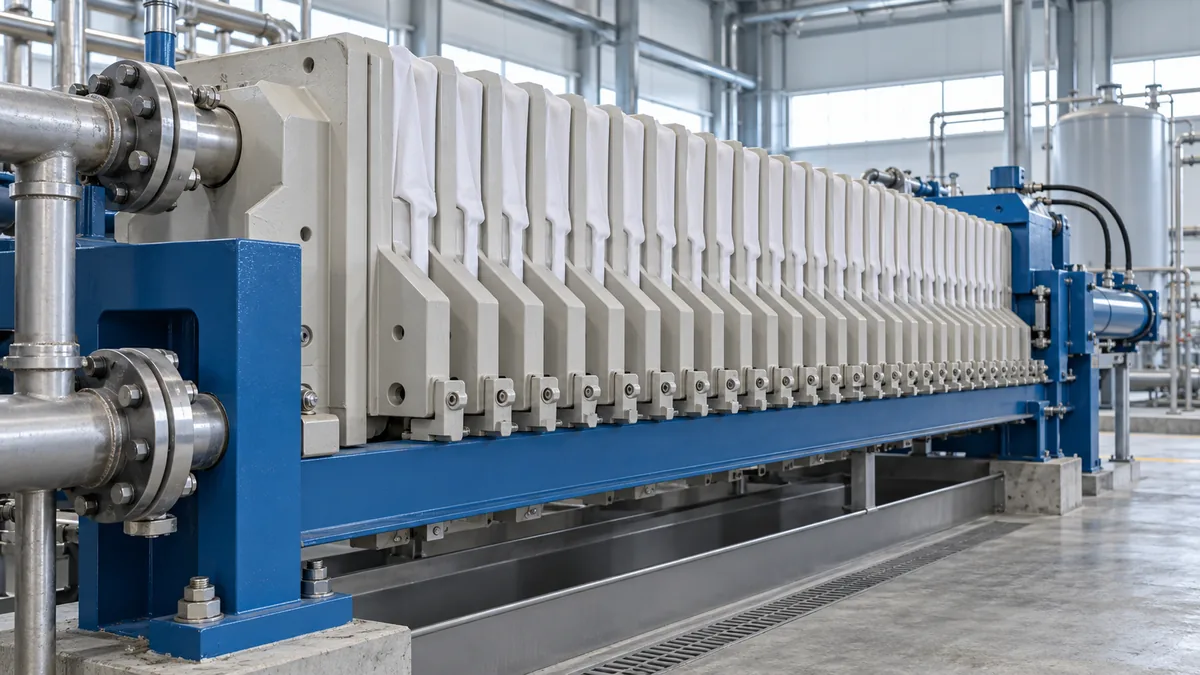
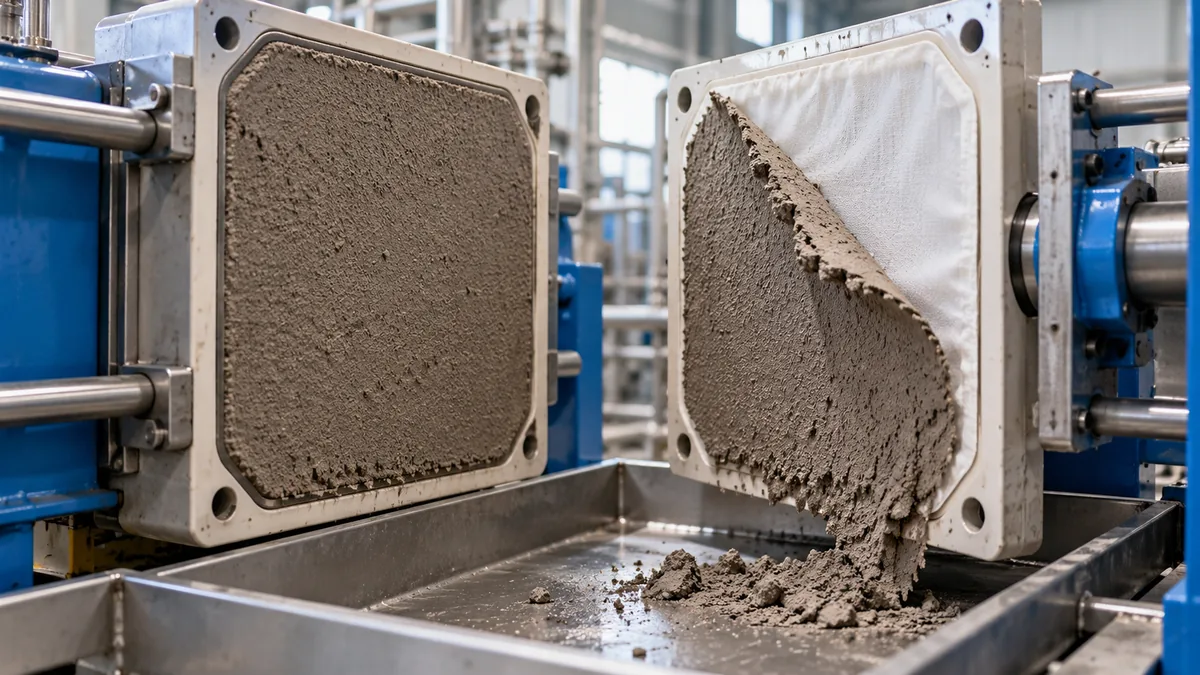
In a recessed chamber plate, the solid plate body forms a cavity between neighboring plates. Filter cloth covers each face, and feed pressure fills the recess. Filtrate drains through the cloth and the drainage channels on the plate surface while solids remain inside the chamber. After the feed stops, the press opens and the cake discharges. There is no second compression stage.
In a membrane plate, the filling stage is similar, but at least one face carries a flexible membrane. After the chamber is full and the feed ends, air or water pressure inflates the membrane against the cake, pressing out additional liquid before the press opens. Membrane plates therefore need inflation medium connections and a more complex plate, seal, and control arrangement.
Where the Configurations Differ Mechanically
The main mechanical difference is not whether the plate has a recess. Both configurations usually have a chamber depth and a filling volume. The difference is the second-stage pressure source.
A recessed chamber plate depends on the feed pump to build cake and force out liquid. The limiting factors are feed pressure, solids compressibility, and drainage. A membrane plate separates the filtration stage from the squeeze stage. Once the chamber is full, the membrane presses the cake. This is why a membrane press can sometimes shorten the cycle. The trade-off is that membrane plates have more failure points and need a matching squeeze pressure range and a clean inflation medium.
Filtration Rate, Cake Moisture and Cycle Time
The direct answer is that a membrane plate can lower final cake moisture when the cake is compressible and still contains liquid that can be removed by mechanical squeezing. A rigid recessed plate may leave a compressible fine-particle cake with more interstitial water, especially when the feed cannot be pumped at high pressure long enough to overcome cloth resistance. A membrane plate can press that cake after the feed path is no longer adding new solids.
The table below separates the points that differ most often.
| Comparison point | Recessed chamber plate | Membrane filter plate |
|---|---|---|
| Primary dewatering force | Feed pressure and gravity drainage | Feed pressure plus post-fill mechanical squeeze |
| Final cake moisture | Set by feed pressure, time, cloth and slurry | Can be lower where the cake is compressible and squeeze is matched |
| Equipment complexity | Lower, with a solid plate body | Higher, with membrane, seals, squeeze connections and controls |
| Typical added benefit | Simpler operation and fewer wear components | Shorter cycle or drier cake on compressible solids |
| Main limitation | May not reduce moisture enough for slow, fine, or compressible cakes | Adds cost and maintenance, with small benefit on free-draining slurries |
The moisture comparison cannot be reduced to plate type alone. A membrane plate improves the result when the cake still contains recoverable liquid and the squeeze pressure does not damage the membrane. A recessed plate can outperform a poorly specified membrane plate on a fast-draining slurry because it removes the extra squeeze step and its potential leakage risks.
Matching Plate Construction to Temperature, Pressure and Chemistry
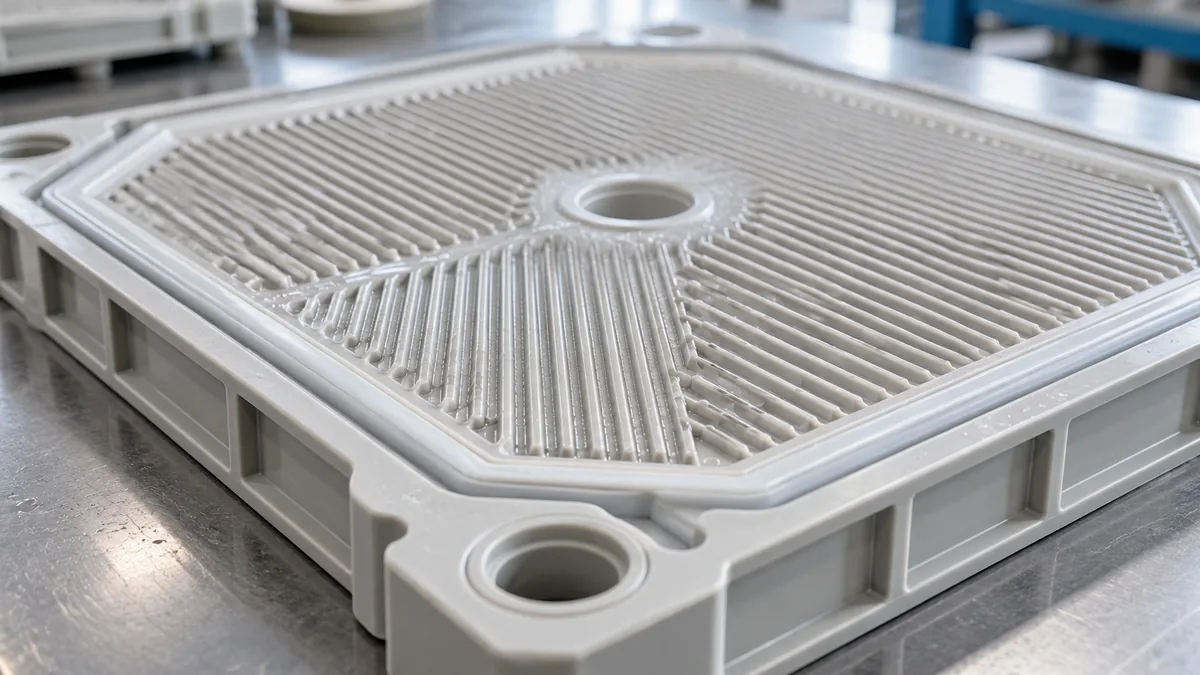
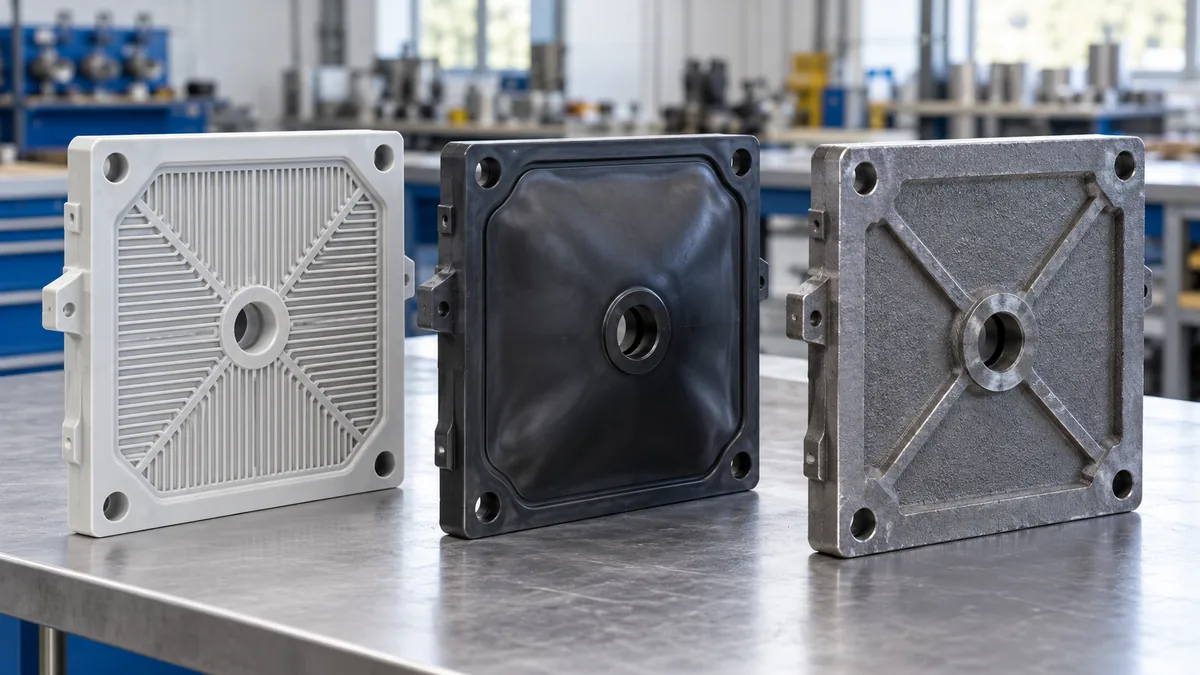
Plate material limits come from the plate body and, for membrane designs, from the flexible layer. In the product range used here, reinforced polypropylene plates are listed for 0.8, 1.0 and 1.6 MPa press ratings, continuous temperature up to 85°C and pH 1-13. That makes them a starting point for acidic or alkaline wastewater, electroplating sludge and mineral slurries within those limits.
Rubber membrane plates are listed for a standard squeeze pressure range of 0.8-1.5 MPa, continuous service up to 75°C and pH 2-12. The rubber membrane has a narrower chemical and thermal window than the rigid polypropylene body, so the squeeze stage can become the limiting part in a hot or strongly chemical duty.
For neutral, high-temperature slurries, cast iron plates can operate to 150°C continuously and 2.0 MPa maximum working pressure, but they are not acid resistant. For low-temperature corrosive service, polyethylene plates are listed to 60°C continuous and pH 1-14. A buyer should compare the process envelope against the plate body and the membrane as a system, not against the chamber shape alone.
These values are supplier-specific limits, not universal plate ratings. Different grades or manufacturers can shift the usable temperature, pressure, and pH envelope.
Maintenance and Failure Patterns That Favor One Configuration
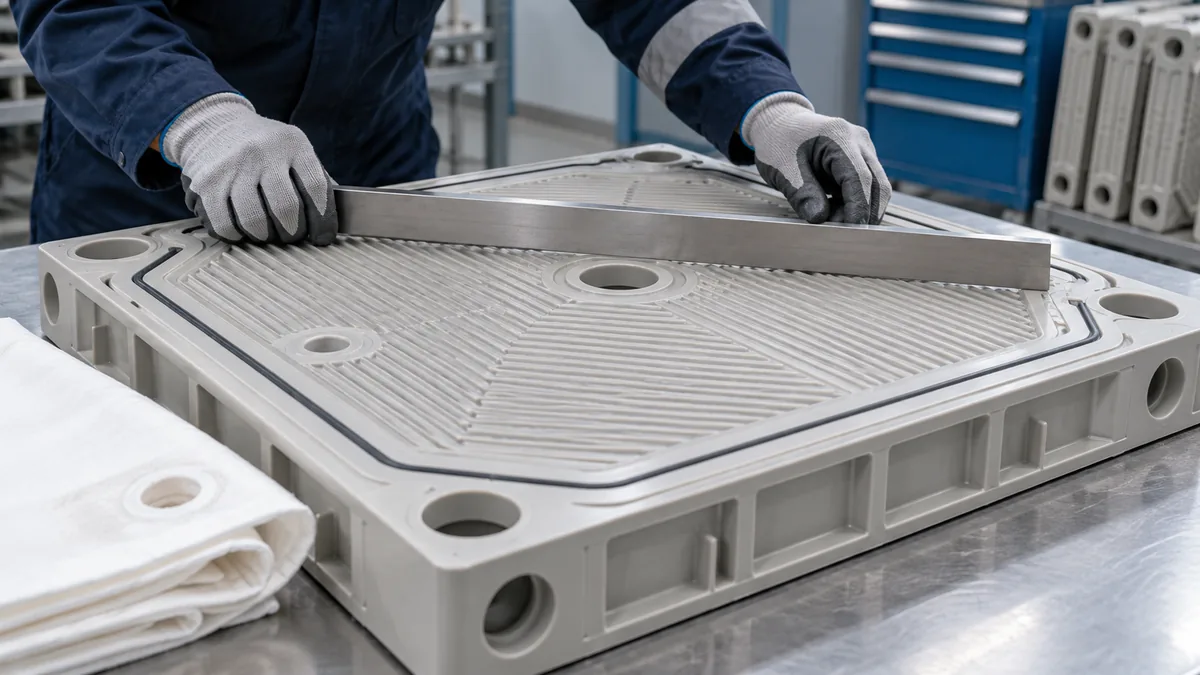
A recessed chamber plate is simpler to inspect: flatness, drainage grooves, feed ports, corners, and sealing faces. When a recessed plate warps or a drainage groove blocks, the symptom is usually uneven cake moisture or plate edge leakage.
A membrane plate needs all of those checks plus membrane condition, squeeze pressure uniformity, inflation medium cleanliness, and the integrity of the flexible surface. A torn or delaminated membrane may allow the squeeze medium to bypass or allow slurry to enter the inflation side. A partial membrane failure can produce uneven squeezing, which is easy to confuse with poor cloth fit or feed distribution.
If the plant has no routine procedure for checking squeeze pressure after each cycle, a membrane installation can hide damage until cake moisture drifts or the press leaks. A recessed plate keeps the maintenance envelope smaller and is easier to replace, but it does not remove the need to control feed pressure and plate alignment.
Selection Checklist for Comparing Quotes and Existing Stacks
The following checks keep a plate comparison on the same basis:
- Confirm the plate matches the existing stack dimensions, chamber depth, feed-port layout, corner geometry and clamping force. Pressure class must match the complete press, not the feed pressure alone.
- Confirm whether the press has a membrane squeeze system, a clean air or water supply, correct pressure controls and suitable drains.
- Define the target cake moisture, cycle time and downstream drying load, and identify whether the slurry is fine, compressible or free-draining.
- Compare material limits for the plate body and the membrane against actual pH, temperature, pressure transients and cleaning chemicals.
- Ask the supplier to state the trial or reference conditions behind any performance claim, and use existing cake data rather than assuming a membrane will dry the cake.
- Decide whether the plant can accept the added maintenance and spare membrane stock.
When those conditions are missing, the recessed chamber plate is the more straightforward starting point because it avoids adding squeeze components that the process cannot use. The membrane plate is a process upgrade only when the slurry has recoverable moisture and the press can control the squeeze.
Confirm Your Plate to Press Match
Send the press drawing, plate dimensions, chamber depth, feed pressure, slurry chemistry and current cake moisture target. Shine Technology will check the replacement against the plate range and recommend whether a recessed chamber or membrane configuration fits the existing press and operating envelope.
Frequently Asked Questions
When Does a Membrane Filter Plate Produce a Drier Cake?
A membrane plate can produce a drier cake when the solids are compressible and still contain liquid that can be removed by mechanical squeezing after the feed stops. The benefit is often small for free-draining, hard-particle slurries that already release water quickly under feed pressure. The decision should be made from trial data or a similar slurry reference, not from plate type alone.
Can a Membrane Plate Be Installed in Any Recessed Chamber Press?
Not automatically. The press must have the squeeze medium connections, pressure controls and clamping geometry to support the membrane plate. The replacement must also match the existing stack dimensions, chamber depth, feed-port layout and cloth fit. An upgrade should be checked against the press manual and the approved drawing before ordering.
Which Plate Material Is Better for Acidic Slurry?
It depends on temperature. Polypropylene plates handle pH 1-13 up to 85°C continuous, while polyethylene plates handle pH 1-14 up to 60°C. Rubber membrane plates are listed for pH 2-12 and up to 75°C. If a membrane plate is required for acid duty, the body may be suitable but the flexible membrane and seals must also withstand the chemistry.
What Should Be Measured During a Replacement Plate Comparison?
Record plate dimensions, chamber depth, port location, feed pressure, maximum slurry temperature, pH, particle size, current cycle time and cake moisture. For a membrane option, also confirm the available squeeze pressure and inflation medium. Comparing these points prevents a lower unit price from hiding material or control compatibility issues.