Demister Pad Packaging: Protecting Mesh Shape in Transit
A demister pad leaves the factory as a controlled bed of fine wire, and it has to arrive the same way. Wire mesh demisters separate droplets by forcing gas through a fixed free volume between the wires, so a band of crushed mesh changes the local density, the local pressure drop and the route the gas takes through the pad. Demister pad packaging therefore belongs in the purchase specification, not in the freight instructions added after the order is placed. The place to start is what the mesh actually does in service, because that is what packing either preserves or destroys.
What Mesh Shape Does Inside a Demister Pad
A wire mesh demister pad is a bed of knitted mesh held between support grids. Gas passes through the mesh, droplets strike the wires, coalesce into larger drops and drain downward against the gas flow. Three properties decide whether that process works: the free volume between the wires, the wire surface area available for droplet capture, and the requirement that gas passes through the mesh rather than around it.
A pad that arrives compressed loses the first property in a narrow band. That band now holds less free volume per unit of face area, so its local pressure drop rises and gas shifts sideways into the open areas beside it. The result is not a uniform velocity through the pad but a set of faster channels, and droplets that had already coalesced can be re-entrained from those channels instead of draining. A crushed edge damages the third property, because a gap between the pad and the vessel wall or the grid frame gives gas a path that never touches the mesh. No mesh specification can compensate for a bypass.
Fretting matters for a different reason. Rubbing between segments in transit works wire ends loose, and loose strands are both a capture defect and a downstream contamination risk. On polymer mesh the same rubbing fuzzes the strands rather than breaking them, which changes the surface a droplet has to wet.
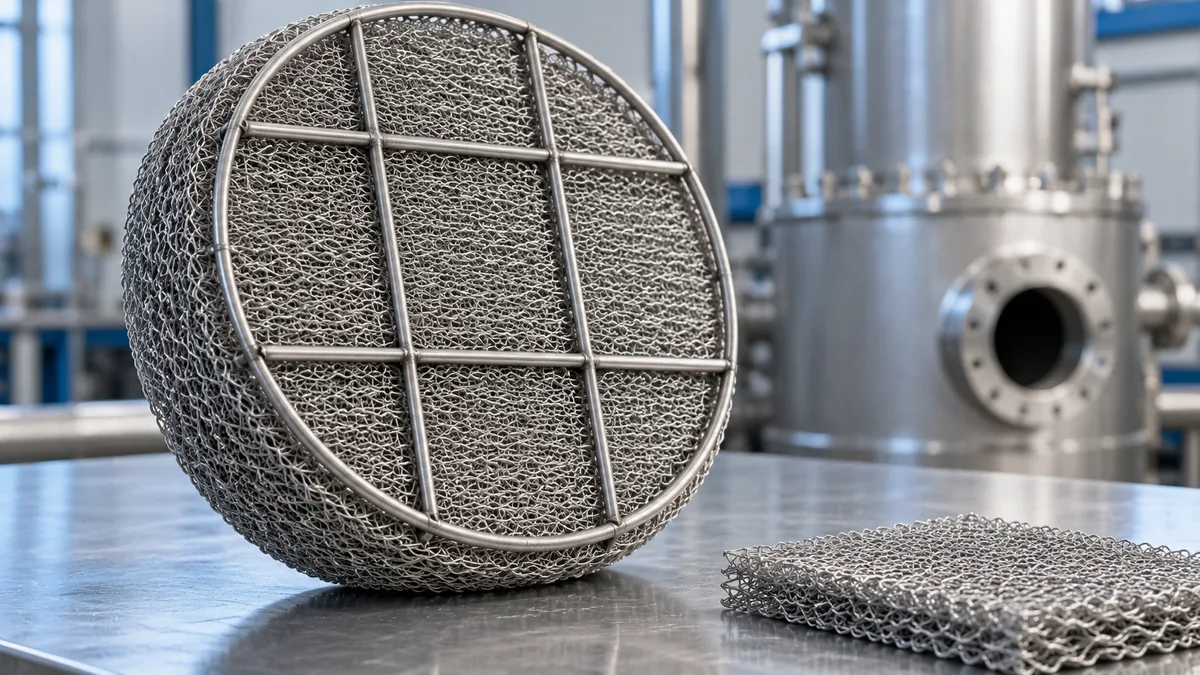
The practical consequence is that outside dimensions tell you very little. Two pads of identical diameter and thickness can perform differently if one arrived with an uneven density profile across its face. Checks therefore compare one area of the pad with another, rather than comparing the pad with a number on a drawing.
Where Shipping Damage Actually Comes From
Most damaged pads arrive in crates that look sound. A crate can appear intact and still pass stacking weight straight into the mesh if it has no load-bearing frame above the pad. Damage follows four routes.
Static compression. Crates stacked beyond what their top face can carry, other cargo loaded above them in a container, or a single crate stored under pallets in a warehouse. The pad face takes the load and compresses as a flat band rather than at one point, which is why the damage often looks like a shadow across the whole surface instead of a dent.
Strapping and restraint. A strap pulled directly over bare mesh compresses a narrow strip into a permanent groove. So does a segment wedged against an unpadded crate wall.
Impact at edges and corners. Fork tines, crate corners and the last metre of a lift. The mesh edge is the least supported part of the pad, and a bent support grid usually drives into that edge instead of shielding it.
Moisture and contamination. Container condensation, sea humidity and grit that lodges between wires during loading. Fine wire and some alloys stain or corrode where wires touch, and contamination trapped inside the mesh cannot be removed by hosing the pad down afterwards.
Vibration contributes to both abrasion and settling. Segments restrained only by their own weight can shift, rub, and end up in a different order from the one they were packed in.
How Pad Construction Changes the Packing Decision
Not every demister pad needs the same packing, and the differences are structural rather than cosmetic.
Standard pads ship as a mesh element with top and bottom grids, sometimes in a frame. The grid is the part that should carry any load, so the crate has to transfer weight into the grid ring or frame edge instead of the mesh face. Drawer-type pads add a carrier, and the carrier has to stay square; a racked carrier will not slide into its guide, which is a common reason a pad is rejected on site. Wave-type pads are formed into corrugations that flatten easily, so they need edge support and should not be stored with weight across the wave direction.
Segmented pads are a separate case. Dividing a large pad into segments solves the manway access problem and creates a new one, because joint faces are where bypass gaps form and matched segments have to stay matched. A crate that mixes segments from three pads to save space costs more at installation than it saved in freight.
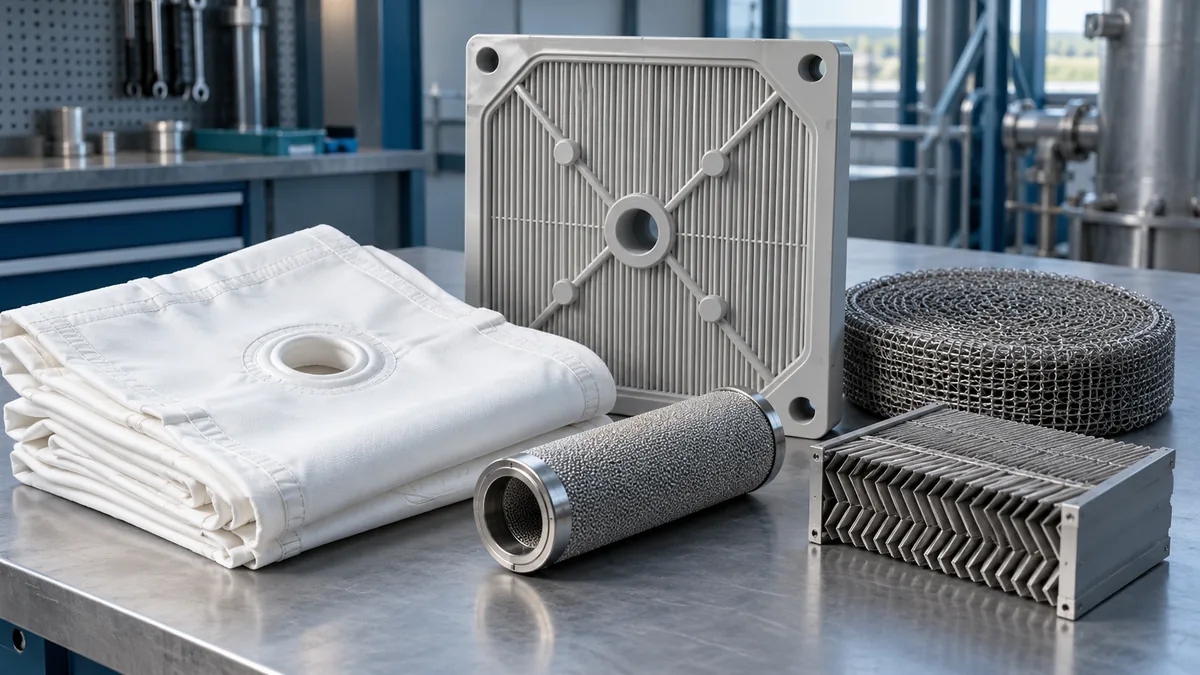
Material choice changes the failure mode more than it changes the packing method. Metal mesh in stainless steels, titanium, nickel alloys or super-duplex grades has spring-back, so a light uniform compression across a whole pad can largely recover once the load is removed. Polymer mesh in PP, PE, PVC, PTFE, FEP or PVDF creeps under sustained load, so a stack height that suits stainless steel is not automatically safe for a polymer pad. Polymer mesh is also temperature-sensitive, and a closed container on a hot route can soften it enough that a crate which holds shape in a warehouse sags in transit.
Vane packs behave differently again, which is why they should not be packed to a demister pad rule. A vane pack is a stack of rigid blades in a frame, so the risks are frame squareness and blade spacing rather than mesh compression. That difference matters when a vessel contains both types of internal: one crate standard will not serve both, and the packing specification should name which requirement applies to which item.

What to Write into a Demister Pad Packaging Specification
“Export worthy packing” and “suitable for sea freight” are not specifications, because neither tells the supplier what to protect or the receiver what to check. Six fields make the requirement testable, and they can be attached to the pad drawing or written into the purchase order.
| Field | What to state | Why a vague note fails |
|---|---|---|
| Pad geometry and segment plan | Diameter or rectangular size, thickness, number of segments, joint marking and segment orientation | Without a segment plan the crate cannot keep matched segments together, so joint faces arrive mixed between pads |
| Mesh and grid build | Mesh grade and wire diameter, mesh density or free volume target, grid material, fixing points between grid and mesh | If the grid is only tacked to the mesh, stacking load pulls the mesh instead of the frame |
| Load path and stacking limit | Whether crates may be stacked, how high, and whether the crate needs a top frame to carry weight | Stacking a crate that was never rated for it is the most common cause of a compressed band across the face |
| Cushioning and restraint | Edge protection, separators between segments, how each segment is held against movement, where straps may and may not run | A strap over bare mesh leaves a permanent groove, and unrestrained segments rub until wire ends break loose |
| Moisture and cleanliness barrier | Barrier bag or liner, desiccant, vapour-phase protection for sensitive alloys, sealing method | Container condensation wets the mesh, and some alloys stain or corrode where wires touch |
| Marking, list and photo record | Segment letters on the crate, packing list with segment count, photographs taken before the crate is closed | Unmarked segments turn installation into a trial-and-error fit inside the vessel |
A vague packing note is easy to recognise because it cannot fail. Here is the difference in practice.
Reject this line: “Demister pad, export packed, handle with care.”
Replace it with: “Pad per drawing number, three segments marked A, B and C, 316L mesh with the wire diameter and mesh density stated on the drawing, grid attached at the marked points, each segment in its own lined sleeve with the joint faces protected, segments restrained so they cannot move inside the crate, no strapping in contact with the mesh, moisture barrier bag with desiccant in each crate, crates marked with segment letters and a two-high stacking limit, photographs of the packed crate sent before dispatch.”
The second version works because a receiver can open the crate and check each clause. It also gives the supplier something to quote against, which is why packing should be agreed before production rather than negotiated after a damaged delivery. State the destination and freight mode as well, since the same crate standard behaves differently on a short road leg and a long sea leg with a transfer at a feeder port.
Receiving Checks Before the Pad Goes Into the Vessel
Opening the crate is the point where the supplier’s packing claim meets evidence. Do it in a clean, dry area before the crate travels to the vessel, and record what you find while the packing is still in place.
| What you see when the crate is opened | What it indicates | What to do before installation |
|---|---|---|
| Flattened band across the pad face | Stacking or strapping load was carried by the mesh instead of the grid | Measure thickness in the band and in an undisturbed area; a measurable step is compression set, not a wrinkle |
| Support grid bent or out of square | Impact during loading or unloading | Check the grid fits the vessel frame before installation, because a bent grid pushes load into the mesh edge |
| Joint faces scuffed or frayed | Segments rubbed together, separators missing or displaced | Examine joint faces for loose wire that can bridge a gap or shed downstream |
| Condensation, staining or grit inside the bag | Barrier failed, or the crate was opened in a dirty area | Dry and inspect before installation, and photograph staining for a material review rather than wiping it away |
| Fasteners, clips or gaskets loose in the crate | Small parts packed without a fixed position | Reconcile against the packing list before the crate leaves the receiving bay |
| Crate sound but pad visibly uneven | Stacking load passed through the crate without leaving external damage | Do not accept an intact crate as evidence of an intact pad |
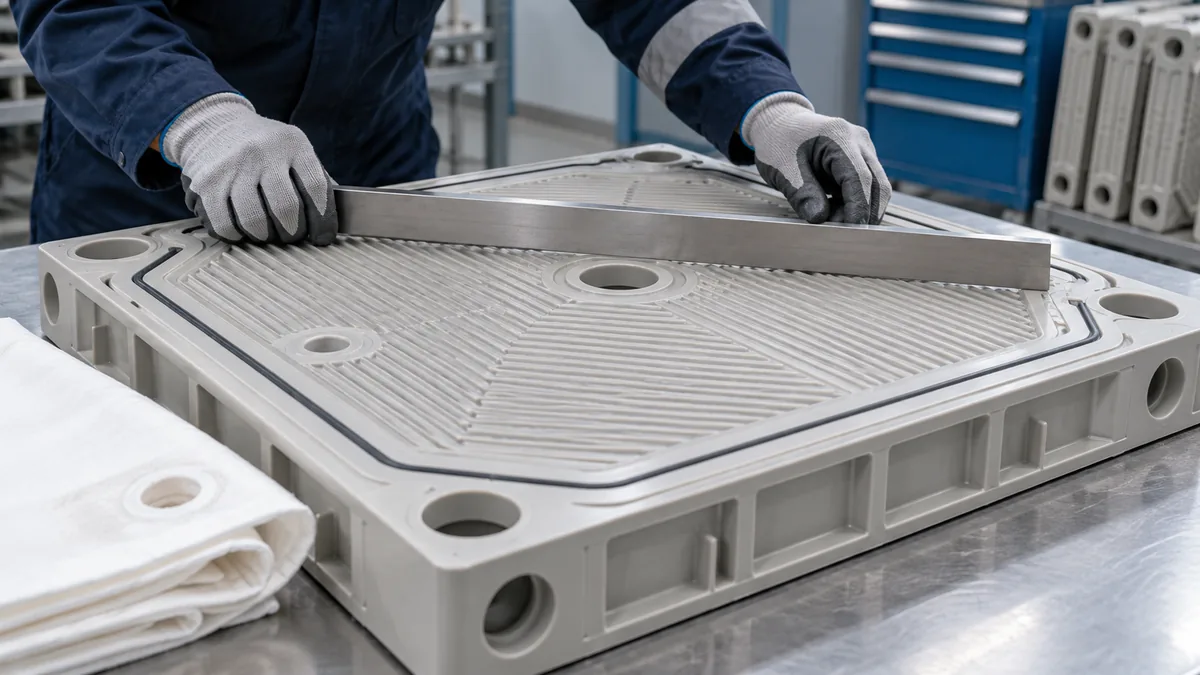
The thickness comparison is the most useful field check and needs no laboratory. Lay a straight edge across the pad and compare the gap under it at the flat band with the gap at an undisturbed area, then repeat at two or three positions. Uniform thickness across the face, square edges and clean joint faces are the three things you can confirm on the receiving bay floor. A density profile cannot be measured there, which is exactly why the visual and dimensional record matters if the pad later underperforms.
Record the pad tag, crate number, segment letters and the position of any defect before anything is moved. A suspect pad should be photographed, quarantined and raised with the supplier, not installed to see whether it works. Installation converts a transport claim into an operating problem, and the evidence is gone by then.
Storage Between Delivery and the Next Shutdown
A pad that survived shipping can still be ruined before the shutdown. Keep each segment in its crate with the barrier and cushioning in place until the installation window opens, and resist the habit of unpacking early to “check it over” without repacking to the same standard.
Store crates on a dry, level surface rather than directly on a plant floor where water collects, and keep them out of stacking arrangements the crate was not designed for. Keep the area away from welding, grinding and sandblasting, because airborne grit that settles into the mesh is difficult to remove afterwards. Polymer mesh pads should stay out of direct sunlight, and all pads should stay clear of traffic routes where a forklift can clip a corner.
Keep the packing list and the segment letters with the crate. If the shutdown is months away, inspect once on receipt, reseal properly, and record the result, rather than discovering a compressed band on the morning the vessel is opened.
Send the Pad Drawing and Destination Before You Book Freight
Tell us the pad type, the inside diameter or rectangular dimensions, thickness, segment count and joint marking, mesh material and wire diameter, required mesh density, support grid material and fixing points, and the destination port with the freight mode. Include the vessel or column tag and the manway size when the pad is segmented, because the packing plan has to suit the access route as well as the pad.
Shine Technology’s technical team reviews the drawing and returns a packing proposal covering the crate layout, cushioning arrangement, restraint method and stacking limit, so the requirement is agreed before production instead of disputed after a damaged delivery. Packing protects a correct mesh specification; it does not replace one, and a pad that has already been compressed needs a material review rather than a straightening attempt.
FAQ
Should demister pads ship assembled or as separate segments?
Both are normal, and the right answer comes from the access route rather than from a packing preference. A pad that fits through the manway and can be handled without bending usually ships as one piece with the grid fitted. Larger pads ship as matched segments with marked joints so they pass through the opening in a controlled order. Segmented shipping is not automatically safer, because the joint faces become the most vulnerable part of the shipment. The packing has to keep matched segments together and protect those faces, and the segment plan belongs in the quotation.
Can a compressed demister pad be straightened before installation?
Partly, and the difference matters. A light, uniform compression across a whole pad can largely recover once the load is off, because metal mesh has spring-back. Localised set does not recover: a strapping groove or a flattened stacking band has bent wires against each other, and that band stays denser than the rest of the pad. Compare thickness in the affected band with thickness in an undisturbed area using a straight edge. A measurable step is a functional defect. Raise it with the supplier before installation, because installing it moves the problem into the gas path.
Does packing change for plastic mesh pads?
Yes, in two ways. Polymer mesh creeps under sustained load, so a stacking arrangement that suits stainless steel is not automatically safe for PP, PE, PVC, PTFE, FEP or PVDF. Polymer mesh also softens as temperature rises, so a crate that holds its shape in a cool warehouse can sag inside a closed container on a hot route. State the destination, the likely route and the expected time in transit, then ask for a stacking limit for that specific pad rather than accepting a general packing note.
What should be photographed before the crate is closed?
Five images settle most disputes. Photograph the pad sitting in the crate before cushioning, so the mesh face and the grid are both visible. Photograph the edge protection and the separators between segments in position. Photograph the segment labels so the letters are readable. Photograph the closed crate with its marking, and photograph the packing list beside it. Those images separate a packing problem from a transit problem without anyone needing to visit the site.