Excess Feed Pressure
Operating pressure exceeds the plate rating.
Filter plates crack at corners, edges and feed holes under long-term high pressure, causing heavy slurry spray and equipment-safety risks.
Filter plates crack at corners, edges and feed holes under long-term high pressure, causing heavy slurry spray and equipment-safety risks.
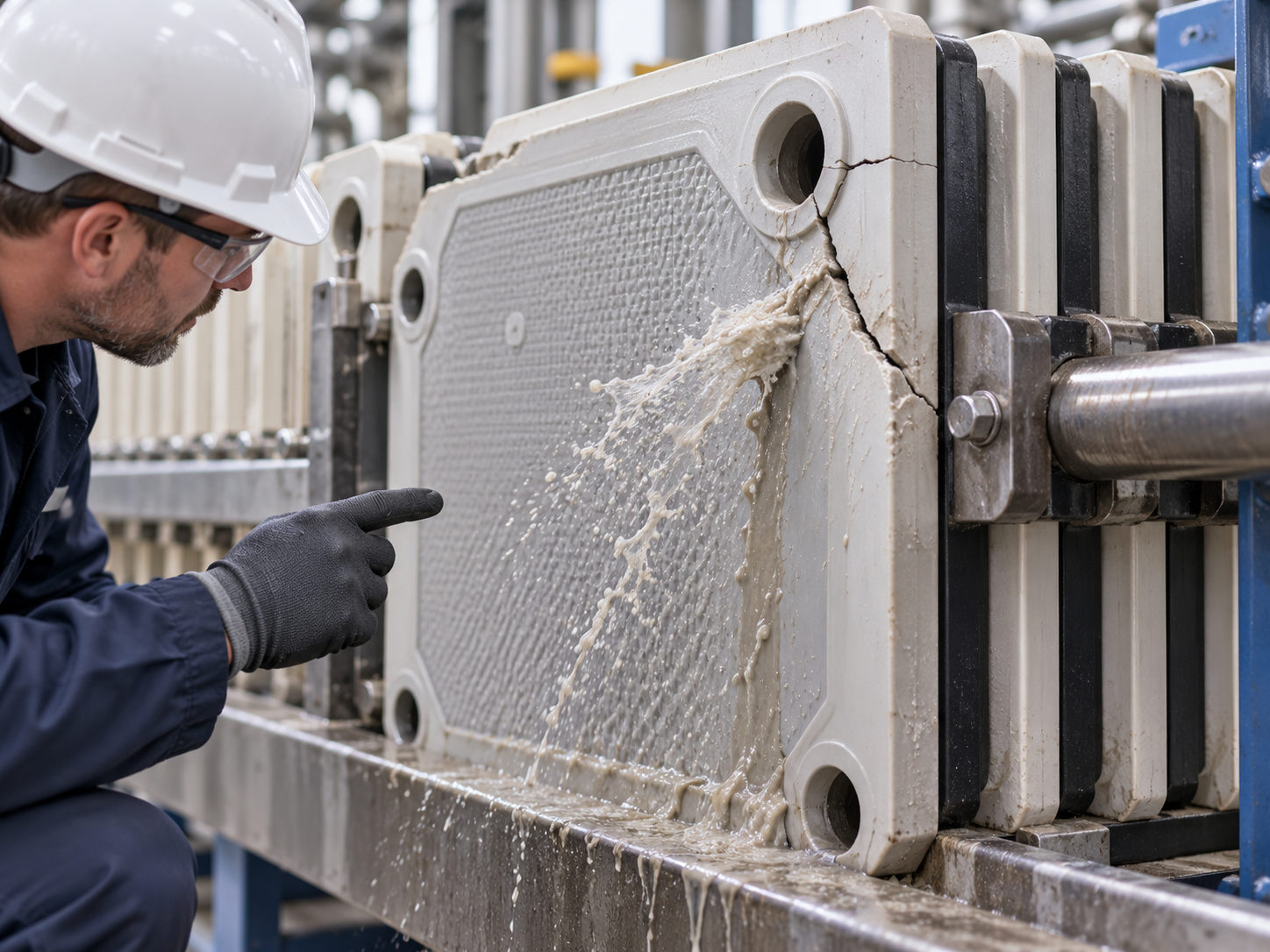
Operating pressure exceeds the plate rating.
Debris or wrinkled cloth is trapped during clamping.
Heat or chemical attack weakens plate toughness.
One-sided chamber filling creates unbalanced stress.
Keep pressure within the plate rating and increase it gradually.
Remove foreign objects and lay cloth flat before startup.
Use corrosion-resistant plate material matched to the slurry.
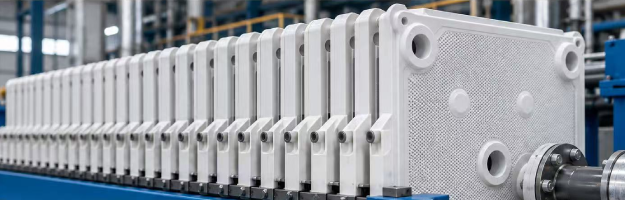
One-piece modified PP plate combining corrosion resistance, toughness and pressure resistance.
View Product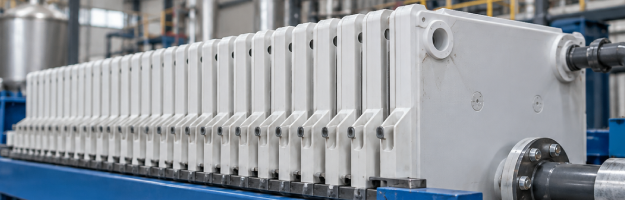
HDPE filter plate with strong wear, impact and corrosion resistance and a low-adhesion surface.
View ProductShare your equipment model, medium, temperature and operating pressure. Our engineers will recommend a practical solution within 24 hours.