How to Compare Filter Plate Offers Beyond the Unit Price
Filter plate offers that differ only by unit price rarely describe the same plate. A lower line price can hide a lower pressure class, a less stable material grade, a missing drawing revision, thinner edge protection, or an inspection scope that shifts the cost of a failed plate back to the buyer. A useful comparison starts by making each quote answer the same technical questions, then prices the differences that affect the press, the cloth, and the maintenance schedule over the plate’s working life.
First Confirm the Plate the Supplier Is Quoting
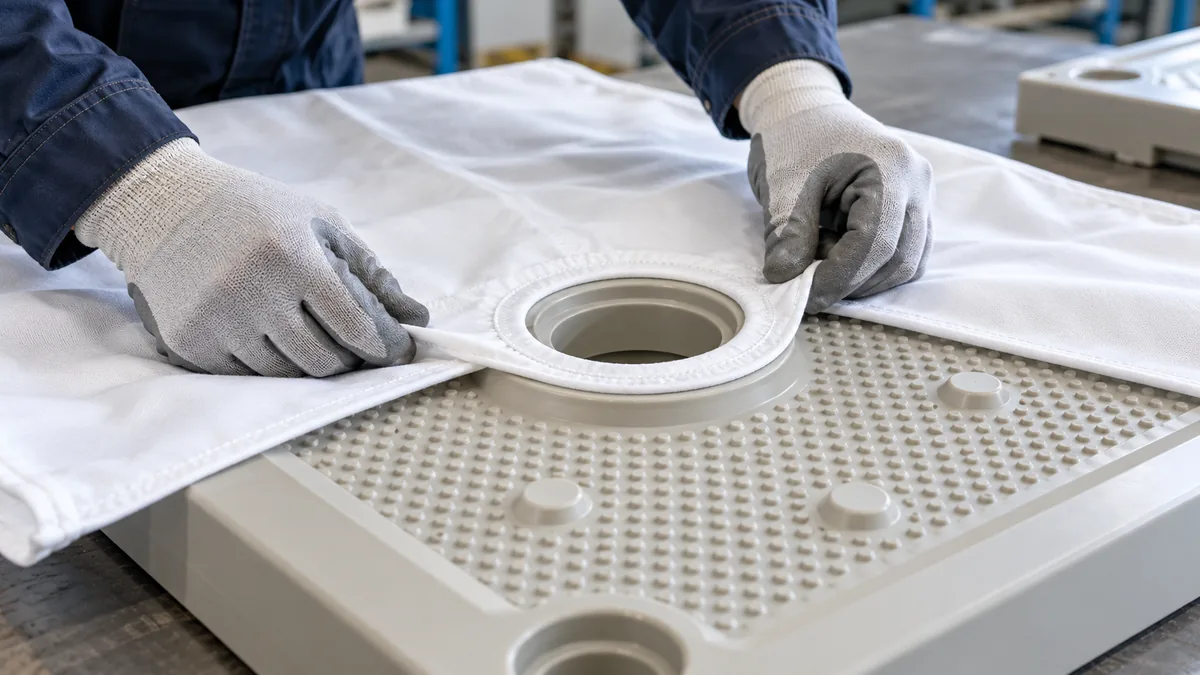
Request the material, plate type, model or drawing revision, chamber depth, feed arrangement, and port layout before comparing prices. A recessed chamber plate and a membrane plate may share the same footprint but not the same function or cost, and a center-feed plate cannot simply replace a corner-feed plate without checking the feed port and cloth cut. When the existing plate is worn, use the approved drawing or measured dimensions from a good plate rather than the old plate’s current shape. If the drawing revision is not named, the supplier may be quoting an older design or a visually similar part with a different sealing face.
Pressure Class and Temperature Limits Change the Cost and the Risk
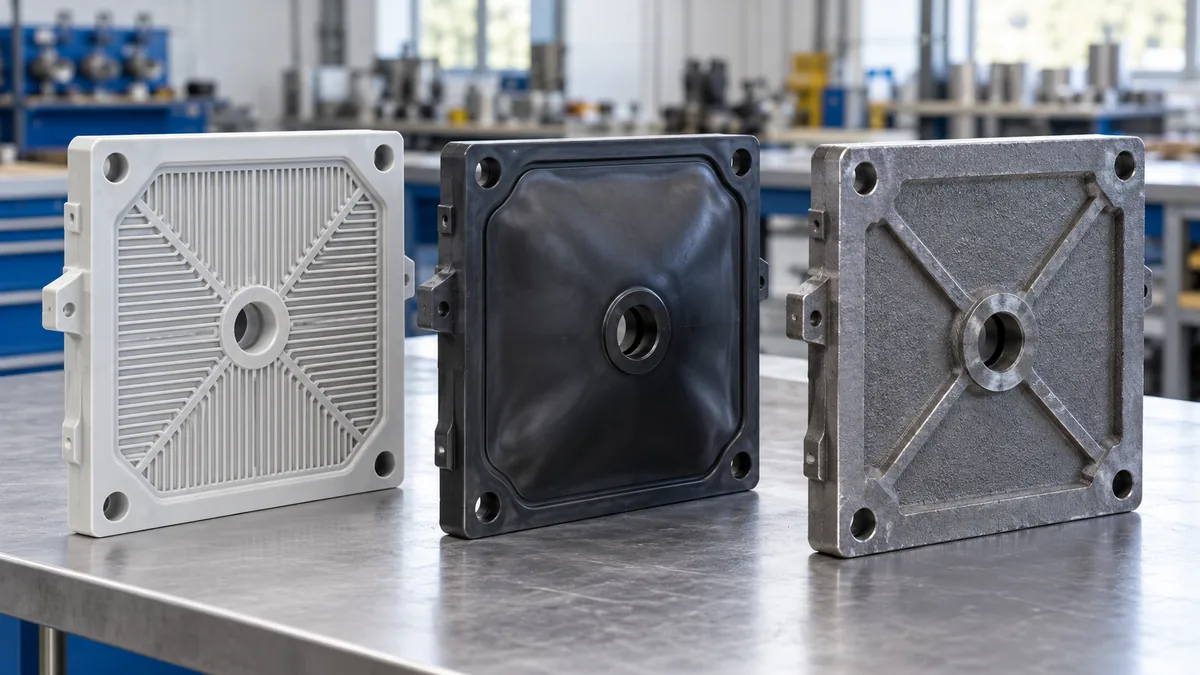
Ask for the pressure class and continuous temperature limit before subtracting a price difference. Polypropylene plates are not a single grade. Different suppliers may offer reinforced modified PP rated for 0.8, 1.0 or 1.6 MPa pressure classes with a continuous limit around 85°C. Polyethylene plates generally sit lower, around 60°C continuous and 0.6 or 1.0 MPa options. Cast iron plates tolerate higher temperature and heavy load but are suitable for neutral or weak alkaline service, not acid duty. A rubber membrane plate carries both the base plate pressure requirement and a squeeze pressure range, often 0.8 to 1.5 MPa, with a lower continuous temperature limit around 75°C. If the process runs near a material’s temperature edge, a small offer difference may reflect a material that will warp or seal poorly.
| Plate material | Continuous temperature | Common pressure options | Main limitation to check |
|---|---|---|---|
| Reinforced modified PP | 85°C | 0.8, 1.0 or 1.6 MPa | Slurry temperature and pH near the listed limits |
| Polyethylene | 60°C | 0.6 or 1.0 MPa | Lower temperature and pressure envelope |
| Cast iron | 150°C | 2.0 MPa | Not acid resistant |
| Rubber membrane | 75°C | Squeeze 0.8 to 1.5 MPa | Squeeze pressure and chemical exposure |
Inspection, Packaging and Delivery Should Be Priced Explicitly
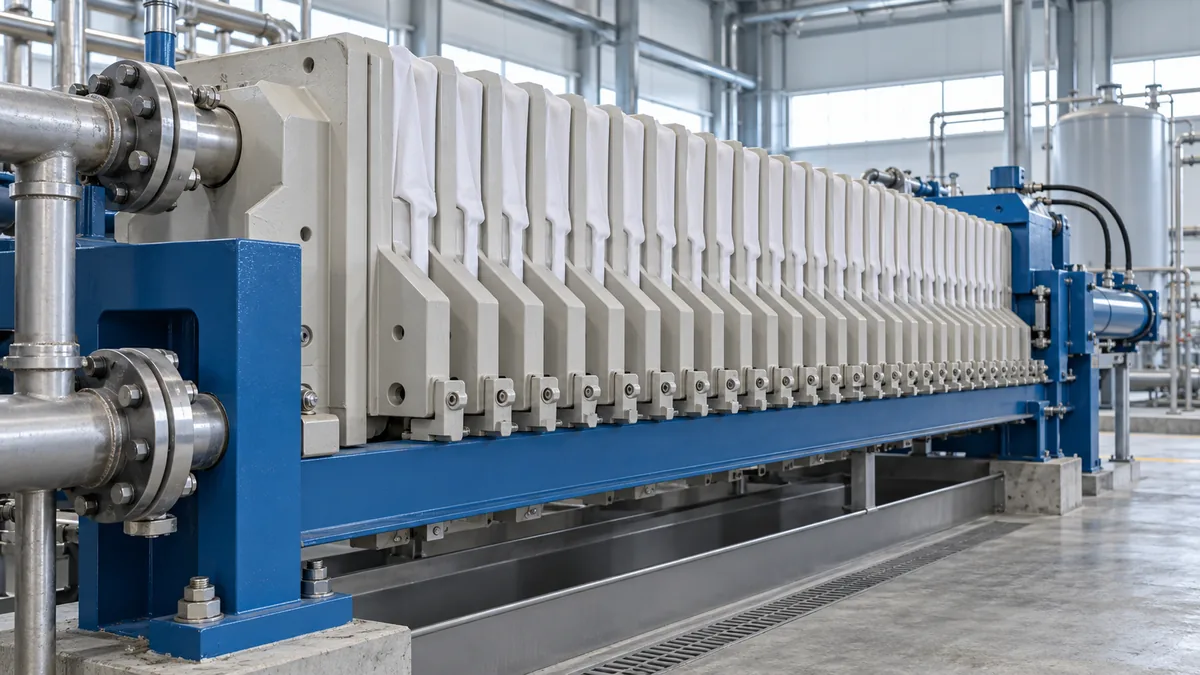
A low unit price may assume bare loading, while another quote includes edge protectors, palletized export packaging, plastic wrapping, and documented inspection. Ask whether the price includes incoming inspection, pre-shipment photos, dimensional checks, and a packing list that matches the receiving team’s copy. Filter plates are rigid, but sealing faces and corners are easily damaged in transit. If damage is found after delivery, the buyer needs the packing record and condition photos to separate shipping damage from a manufacturing defect. Delivery terms also affect comparison. One supplier’s lower price may be ex works while another includes freight to the site, customs documents, and delivery to the shutdown window.
Compare Lifecycle Cost and Plate Replacement Triggers
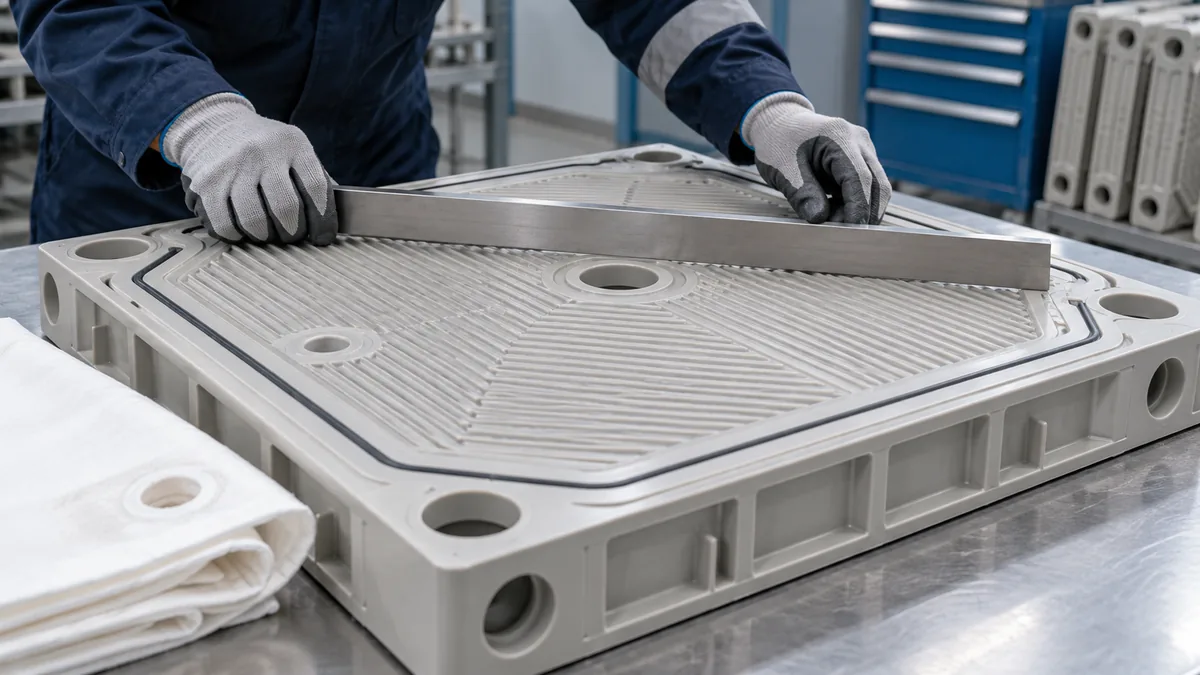
Do not compare a replacement plate as a one-time purchase. A cheaper plate may need replacing sooner if the material is less resistant to the slurry, the sealing face is machined less accurately, or the plate warps after hot service. Look at the cost per filtration cycle rather than only the invoice: purchase price plus installation and handling, divided by expected useful life, adjusted for downtime risk and damage to cloth or adjacent plates. A plate that leaks can shorten filter cloth life, slow production, and create cleanup work that is not included in the plate line price. If the supplier cannot explain the material grade, pressure class, surface finish, and past failure mode the replacement is meant to solve, the lower quote is not yet a lower life cost.
Turn the Quotes Into a Normalized Bid Table
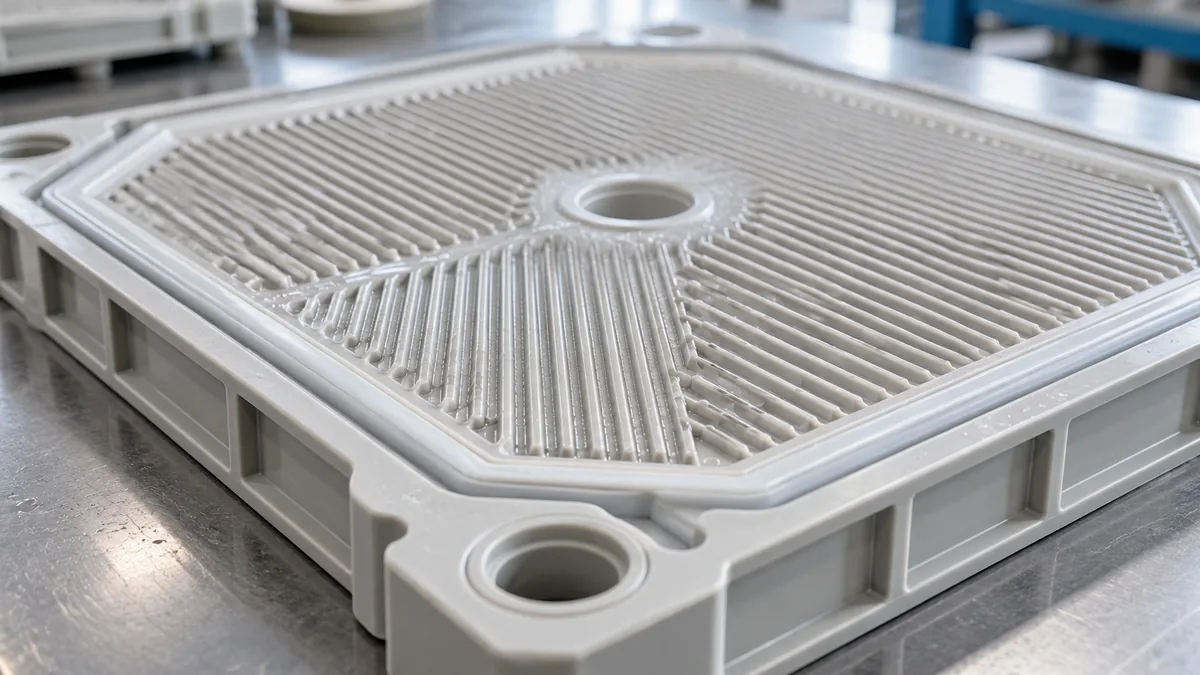
Build a table with the same rows for every supplier. Each row should record the quoted value and the evidence supplied with the quote. Do not let a supplier fill only the line price.
| Comparison line | What to record from each offer | Why it matters |
|---|---|---|
| Material and grade | PP, PE, cast iron, rubber, with reinforcement or drawing note | Similar plates can have different temperature and pressure limits |
| Drawing revision | Part number, revision, dimensions, chamber depth, port layout | Prevents ordering a visually similar but incompatible plate |
| Pressure class | Rated MPa matched to the press | A lower class can deform or leak |
| Inspection scope | Dimensional check, surface check, pre-shipment photos, certificate | Shows whether the plate was checked before packing |
| Packaging and delivery | Edge protection, palletizing, moisture protection, incoterm, site delivery | Damage and freight can erase a price difference |
| Acceptance criteria | First article approval, measurements or trial that must pass | Converts the quote into repeatable acceptance |
Turn the Review Into an Acceptance Plan
Before selecting the offer, agree what happens after delivery. Request a drawing approval step, a first-article inspection, and a trial if the plate is being introduced to an existing press. The acceptance should include dimensional fit, port alignment, sealing face condition, and material traceability if the application is food, pharmaceutical, or corrosive service. If the first article passes, state that repeat orders must use the same material grade, drawing revision, and inspection file. This prevents the supplier from quietly changing the source material or improving the quoted price on a later order with a lower grade. Do not accept a quote that names only the unit price and a delivery date.
Request a Filter Plate Quote Comparison
Send your current filter plate quotes, the existing plate drawing or measurements, the feed and port arrangement, and the process conditions to Shine Technology. The technical team will compare material grade, pressure class, temperature limits, chamber depth, inspection scope and delivery terms, and will identify which offer is normalized for your press and replacement risk. Contact the technical team through shinefiltration.com and ask for a quote comparison.
FAQ
Are higher pressure class plates always worth the higher price?
Not always. The pressure class should match the complete press and the maximum expected operating condition. A plate above the press rating adds cost without automatically adding life, while a plate below the required class can deform or leak. Confirm the press requirement rather than choosing the highest number.
Do I compare membrane and recessed chamber plates on the same basis?
No. They serve different functions. A membrane plate uses air or water squeeze pressure to reduce final cake moisture, while a recessed chamber plate relies on filtration and feed pressure. If both appear in quotes for the same press, compare them by expected cycle time, cake moisture target, and total operating cost, not by unit price alone.
What documentation should each filter plate quote include?
Ask for the material and grade, drawing revision, pressure class, continuous temperature limit, pH range, chamber depth, feed and port layout, inspection scope, packaging method, and delivery term. A quote that supplies only the size and unit price does not provide enough information for a fair comparison.
Is a lower priced plate acceptable if the dimensions match?
Not automatically. Identical outside dimensions can still hide differences in chamber depth, port layout, sealing face design, material grade, or pressure class. Use the approved drawing, material statement and an acceptance check before accepting the lower offer.
How can we compare replacement plates across suppliers without brand names?
Use the existing drawing or measured dimensions, material type, pressure class, temperature and pH limits, feed and discharge layout, inspection scope, packaging, and acceptance criteria. When those fields match, the quotes can be compared on delivery and lifecycle value rather than on brand or line price.